What Does 'Invoice' Actually Mean?
Someone has just said “send me an invoice” and you’re not entirely sure what they’re asking for.
You’re not behind. Most people who start working for themselves have never sent one, because employees never need to — payroll handles it. The moment you go independent, this small document becomes the thing standing between the work you did and the money you’re owed.
Here’s what it is, in plain terms.
An invoice is a request for payment
That’s the whole definition. It’s a document you send to a client saying: here is the work I did, here is what it costs, here is how and when to pay me.
It is not a receipt. It is not a contract. It is not a payment. It’s the formal ask.
Three documents get confused constantly, so it’s worth separating them:
| Document | When it’s sent | What it says |
|---|---|---|
| Quote (or estimate) | Before the work | “Here’s what this would cost” |
| Invoice | After the work | “Here’s what you owe me, please pay” |
| Receipt | After payment | “You paid, here’s your proof” |
Send them in that order and you’ll never be confused again. Quote, do the work, invoice, get paid, receipt.
What has to be on it
There’s no universal legal template, but a client’s accounts department needs certain things or they can’t process it. Miss one and your payment stalls in someone’s inbox while they email you asking for it.
- The word “Invoice” — sounds obvious, but it tells their system what this is
- A unique invoice number — sequential, no gaps, no duplicates.
2026-001,2026-002. You’ll need this at tax time. - Your name and contact details — business name if you have one, your own name if you don’t
- Their name and address — the legal entity that’s paying, not just your contact’s first name
- The date you’re sending it
- A description of the work — specific enough that someone who wasn’t in the room understands it
- The amount owed, and tax if you charge it
- Payment terms — when it’s due
- How to pay you — bank details, or a payment link
That’s it. A plain document with those elements is a valid invoice. You don’t need a logo, a design, or a company to send one.
“Net 30” and other payment terms
Payment terms tell the client when the money is due. The common ones:
- Due on receipt — pay now
- Net 7 / Net 14 / Net 30 — pay within 7, 14, or 30 days
The number counts from the invoice date, not the day you finished the work. Finish on the 1st, send on the 10th with Net 30, and payment is due on the 9th of the following month — not the 31st.
If you’re new, shorter terms are almost always better. Net 30 became standard because large companies wanted it, not because it suits someone waiting on the money to pay rent.
The part most guides skip
Here’s the thing that catches people out, and it matters more than any formatting rule:
Sending an invoice is not the same as getting paid.
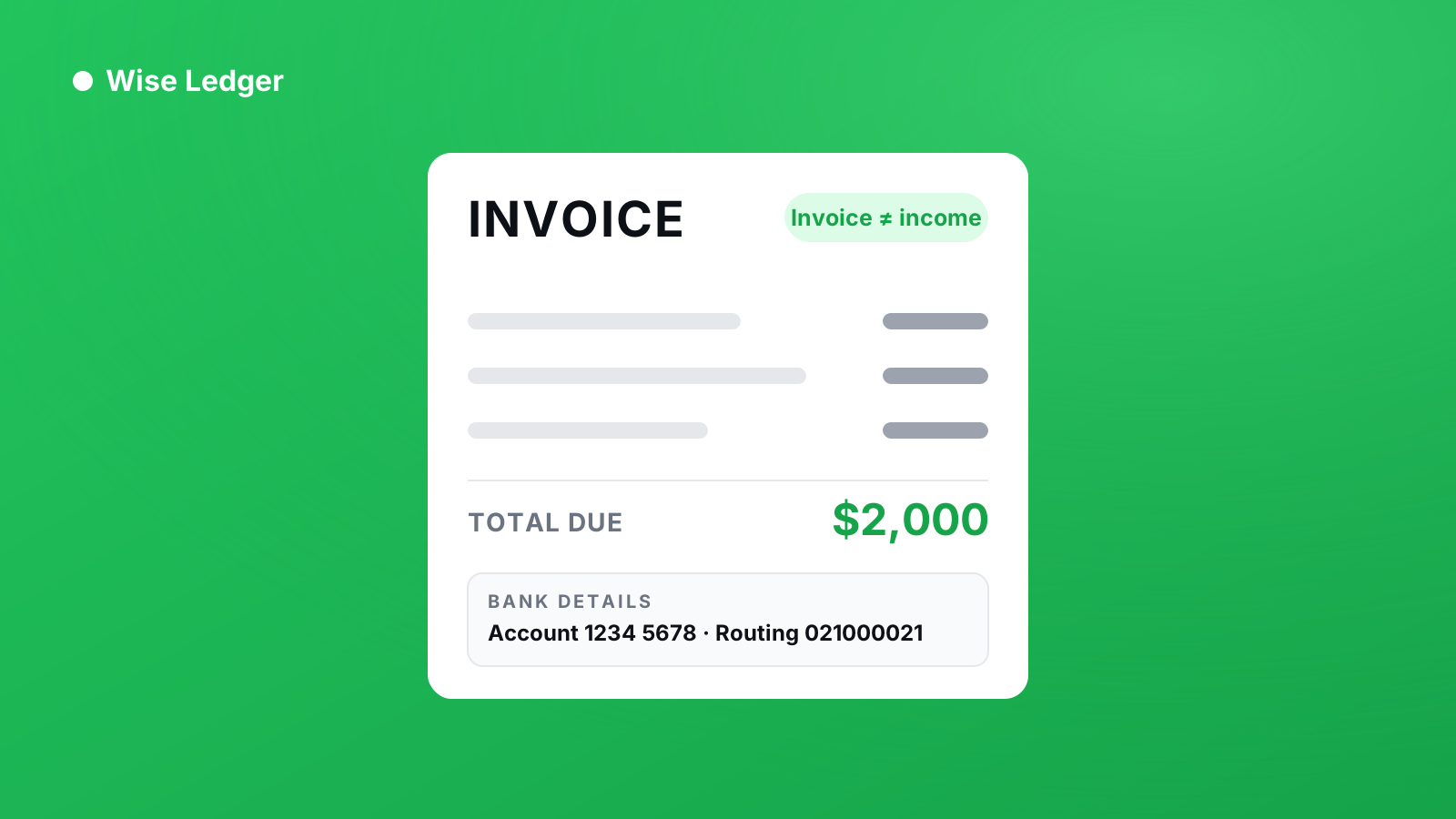
Obvious when stated. But it quietly breaks people’s books, because most accounting software counts an invoice as income the moment you send it. So your reports show a great month while your bank account shows something very different — you’ve “earned” money that hasn’t arrived.
For a freelancer without a credit line, that gap is the difference between a business that works and one that runs out of cash while the reports look healthy. We wrote about that in more detail: why your profit says $4,000 and your bank says $900.
The practical version: track two numbers, not one.
- What you’ve actually been paid — money that exists
- What’s still outstanding — invoices sent, not yet settled
Kept apart, both are useful. One tells you what you can spend; the other tells you who to chase.
What to do when it isn’t paid
Some invoices don’t get paid on time. That’s normal, and it’s rarely malice — it’s usually that it landed in the wrong inbox or missed a payment run.
A reasonable sequence:
- Day after due date — short, friendly email. Attach the invoice again.
- Week two — a phone call. Ask if there’s a problem with the invoice itself; there often is, and it’s usually a missing PO number or the wrong entity name.
- After that — a firmer written notice referencing your terms.
The single best defence is agreeing terms before you start the work, in writing. An invoice is much easier to chase when it’s confirming something already agreed.
Sending your first one
You don’t need software to send an invoice. A clearly written document with the elements above is legally fine.
What software saves you is the bookkeeping around it: sequential numbering that doesn’t collide, knowing which invoices are still outstanding, and — the important bit — not confusing “invoiced” with “paid.”
Wise Ledger sends invoices and records payments as two separate events, so an unpaid invoice never quietly counts as income. You see what you’ve actually made and what you’re still owed, as two distinct numbers.
That’s the whole point of the exercise. An invoice is how you ask. Getting paid is what counts.
See what you've really made — and what you're still owed.